

Blown-In Attic Insulation
Blown-in attic insulation spreads an even layer over the entire attic floor, around wires and trusses, while a clean existing layer stays in place.
How it works and what it costs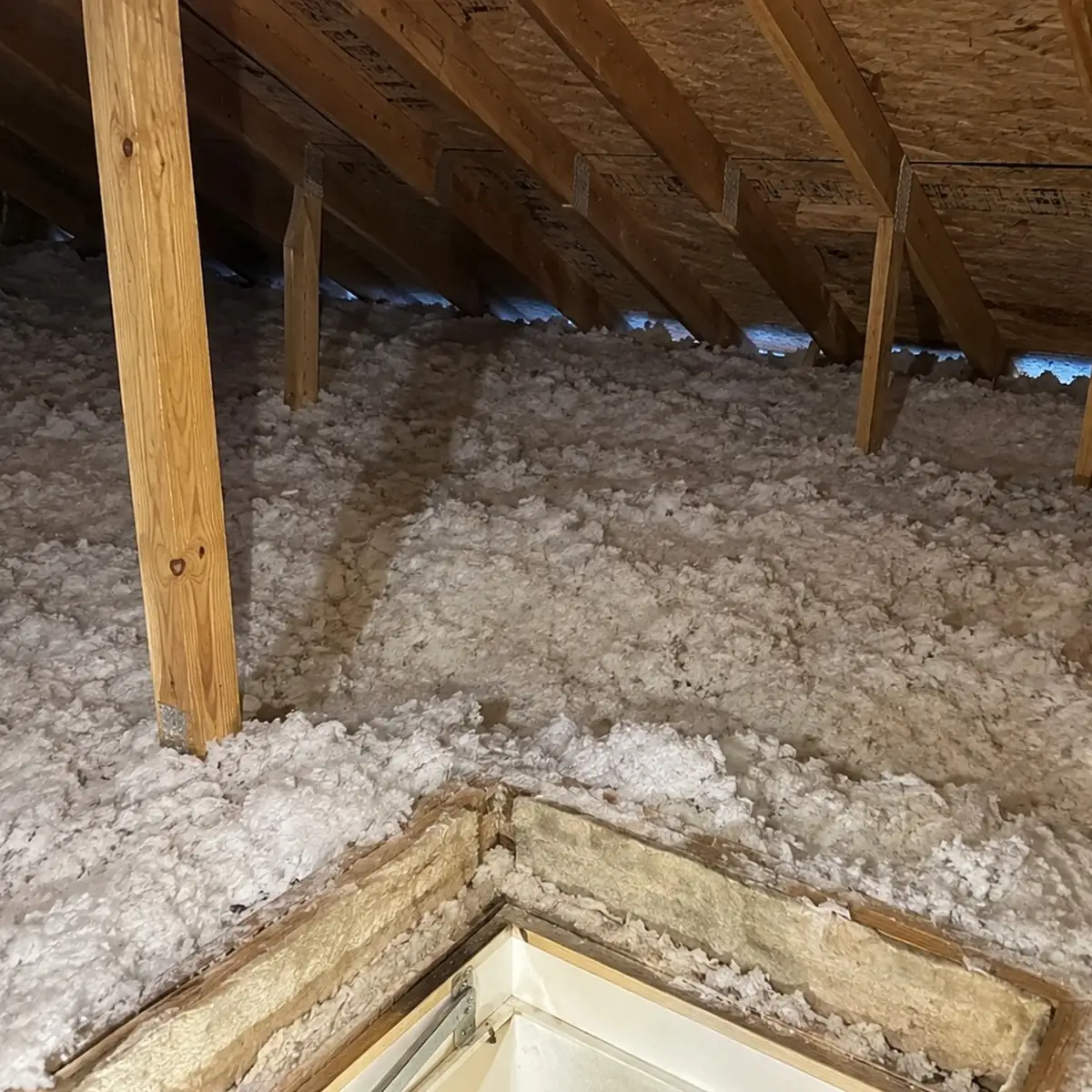
Barrhaven Attic Insulation provides attic air sealing, blown-in attic insulation, old insulation removal and attic ventilation to houses and townhomes in Barrhaven, Riverside South, Manotick and the rural south end of Ottawa. Each job we do is fully insured. Your free written quote always lists the sealing that goes into the attic ahead of the insulation.
Our phone number is (343) 301-5519.
We seal the attic floor first, then we insulate it. Loose fill slows heat, yet house air still drifts right through it wherever the ceiling has a hole. Closing those holes first is what lets the new attic insulation perform.
That order is the whole idea behind the company. You get one visit to look, one written price with every line spelled out, and one crew that seals, baffles and fills most Barrhaven attics in a single day. The about page explains how we work and why the order matters.
Each job below starts the same way, with the ceiling sealed before anything new goes on top of it.
Blown-in attic insulation spreads an even layer over the entire attic floor, around wires and trusses, while a clean existing layer stays in place.
How it works and what it costs
R-60 attic insulation is our usual target for Barrhaven attics: a deep, even layer over a sealed ceiling.
How it works and what it costs
Attic insulation removal vacuums out wet, dirty or flattened material, leaving a bare floor that can be sealed and filled again from scratch.
How it works and what it costs
Attic air sealing plugs the gaps in the ceiling so warm house air stays downstairs, and it happens on every job before anything new goes on top.
How it works and what it costs
Attic ventilation moves outside air in at the soffits and out near the ridge, so the attic stays cold and dry in winter and less hot in summer.
How it works and what it costs
Room over garage insulation warms the bedroom or bonus room above an attached garage by sealing and insulating its floor, its short side walls and the slope overhead.
How it works and what it costs
Cathedral ceiling insulation fills the rafters above a sloped or vaulted ceiling, a closed space too tight for loose fill to be spread across.
How it works and what it costs
The attic insulation rebate from Ontario's Home Renovation Savings program covers a share of an attic upgrade, with the payment tied to the R-value the attic has before work begins.
How it works and what it costs
Attic insulation cost in Barrhaven depends on the attic's floor area, the depth you add, the sealing needed and whether old material comes out first.
How it works and what it costsUpstairs bedrooms hold the same temperature as the main floor. A sealed ceiling with deep attic insulation keeps the top floor from turning chilly in winter and stuffy in summer.
Heating bills come down. Less heat escapes through the ceiling, so each furnace cycle lasts longer before the thermostat calls again.
Drafts at pot lights and the hatch disappear. Air sealing stops the cold puffs that come down through gaps in the ceiling on windy nights.
Less moisture reaches the roof boards. Warm house air carries water vapour, and keeping it out of the attic keeps the roof deck drier through the winter.
Summer bedrooms stay cooler. A deep layer keeps the heat that builds under the shingles from reaching the rooms below.
The home is easier to sell later. A written record of the sealing and the final attic insulation depth answers a buyer's question before it is asked.
These promises hold on every attic, from a small townhouse hatch to a large detached house in Stonebridge.
Attic insulation is made of fibres with air between them, so air can pass through it. That is why we seal the attic floor first. Foam, caulking and gaskets plug every gap in the drywall, and the new layer then sits on a surface that keeps warm air inside.
The usual leaks are easy to name. Wires and plumbing stacks pass up through the top plates of the walls. Bathroom fans sit in rough holes cut through the drywall. Pot lights, the attic hatch and the chimney chase all leave gaps. Each one gets sealed with the material that suits it. The attic air sealing page lists the full set.
Pot lights are one of the biggest leaks we find in Barrhaven homes built over the last thirty years. Older recessed housings have open seams and vent holes, and the heat from the bulb pulls warm air up through them every time the light is on.
We fit sealed covers over the housings that need them, or seal the ceiling around housings that are already rated airtight. The new layer then covers a light that no longer leaks. Icicles that hang in a line along one part of the roof often point to the pot lights below.
Barrhaven's first streets date from the late 1960s and the 1970s, an era when attics got far less insulation than they do today. A ruler pushed into the layer in many of these houses shows only a few inches, often packed down and grey with dust.
After the sealing, the usual fix is a top-up to R-60. The R-60 attic insulation page explains how deep that is and how the depth is checked. A clean, dry old layer stays put and counts toward the total.
Newer houses in Longfields, Davidson Heights, Chapman Mills and Half Moon Bay were insulated to the level the code asked for in their year. That level is lower than many owners now want, and the attic hatch on these homes was often never sealed.
Blown-in attic insulation adds depth over the existing layer without taking anything out. We seal the hatch and the ceiling openings first, then blow the new layer to an even height across the whole attic.
Homes along the south and west edges of Barrhaven, and out toward Richmond and North Gower, face open farm fields. Wind across that flat ground blows in through the soffit vents and pushes loose fill away from the outside walls.
Baffles in each rafter bay solve it. They hold the insulation back from the vents, keep a clear path for air to reach the roof, and stop the wind from scouring the edge of the layer. The attic ventilation and baffles page covers this work.
A bedroom over an attached garage has cold air below it and a short attic beside it. Heat leaks out through its floor, its short side walls and its sloped ceiling, so the room trails the rest of the home by a few degrees.
We seal and insulate each of those surfaces in the right order. The room over garage insulation page shows where the heat goes and how each part is fixed.
Insulation soaked by a leak, spotted with mould or fouled by mice belongs out of the house. It also hides the ceiling leaks that need sealing. In those attics we vacuum the old layer out first, seal the bare floor, then fill it again.
Attic insulation removal pulls the old layer through a vacuum hose to our truck at the curb, which keeps the hallways clean. If we find vermiculite, the work stops until it has been tested, because some vermiculite contains asbestos and only an abatement contractor should take it out.
Vaulted rooms and great rooms with sloped ceilings have no open attic to fill. The insulation has to fit inside the roof framing, which leaves less space for depth.
Cathedral ceiling insulation uses dense materials that give more R-value per inch. We look at the framing, the vents and any leaks before choosing the method.
Most Barrhaven jobs fall between $1,500 and $3,500. Floor area, added depth and the amount of sealing decide where yours lands. The attic insulation cost page breaks the ranges down by job, and the estimator further down this page works one out from your square footage.
Ontario's Home Renovation Savings program puts money toward attic upgrades. It has fixed rules on how much insulation is there to start and on which contractors can file for it. The attic insulation rebate page covers the amounts, both routes and who qualifies, as last checked in October 2026.
The visit comes first. Up through the hatch we go to read the depth, mark the leaks and take photos, and a written quote follows by email.
The house is protected next. Drop sheets cover the route from the door, and plastic closes off the area under the hatch.
The attic floor is sealed. Wire holes, plumbing stacks, top plates, fans, recessed lights and the hatch frame get closed with foam, caulking or gaskets.
Baffles go in at the eaves. Then loose fill is blown to the quoted depth, measured against markers stapled across the attic.
You get the photos and the final numbers. We clean up, show you the attic, and leave a record of the sealing and the attic insulation depth that was installed.
Barrhaven has been part of Ottawa since 2001, and we cover all of it, from Old Barrhaven and Longfields to Stonebridge, Half Moon Bay and Heart's Desire along the Jock River. Across the Rideau River we serve Riverside South and Findlay Creek, and to the south the villages of Manotick, Greely, Richmond and North Gower.
Phone us or fill in the form on the contact page to set up a visit anywhere in that area. The quote costs nothing at any address inside it.
Choose the type of job and type in the attic's floor area. You will see the usual Ontario range for that work, and the quote we write after the visit sets your actual price.
Ranges are 2026 Ontario market figures. Job types that mention sealing already include the sealing, the baffles and the hatch.
Typical installed range
Phone now to set up a free attic visit and get the sealing and the insulation priced in writing. (343) 301-5519
Give us a few details about your home and its attic. Our office phones back to book the visit. Calls go to (343) 301-5519.
Fibre insulation slows heat, yet air moves through it freely. Plugging the ceiling gaps first keeps warm, damp house air below, so the new layer delivers its full R-value.
Older pot lights that are not rated for contact with insulation need a cover or a clear space around them. Lights rated for insulation contact can be sealed and covered directly. We check each one during the visit.
Yes. The work happens inside the attic, so snow on the roof does not stop it. Winter is when drafts and cold rooms are easiest to find, which makes it a good time to book.
Please clear a path to the attic hatch and move anything stored directly under it. If the hatch is in a closet, empty the shelf below it. We cover the floors ourselves.
Most townhouse and detached house attics are sealed, baffled and insulated in one day. Attics that need the old insulation removed first usually take two days.